

What is BRI X?

-
Teachers are expected to respond to data, but are rarely trained in how to interpret it or what to do next.
-
Without a system for diagnosing misconceptions, interventions become generic, delayed, or misaligned.
-
Data without direction = Intervention without precision.
What causes gaps in student math understanding?
Every fall, students enter your classroom with their wall of knowledge, built brick by brick. But, that knowledge has gaps, created by a variety of reasons - and when a brick wall has gaps, the foundation becomes weak.
The challenge for teachers is identifying & responding to those gaps effectively.
_edited.jpg)
BRIQX makes translating data into clear instructional action easy
using the 4 key parts to the BRIQX Process
The DELP
The Data Error Literacy Protocol is the backbone of the BRIQX program. It turns assessment data into an instructional decision making engine. It's a simple, researched-backed system - a repeatable 5 step instructional loop that:
-
Assesses student's current understanding
-
Diagnoses misconceptions using error analysis
-
Creates a focused, biweekly plan to improve student thinking
By pinpointing the missing 'bricks' - the specific root causes of academic struggle - the system identifies the most granular areas of need to begin effectively closing knowledge gaps.
1
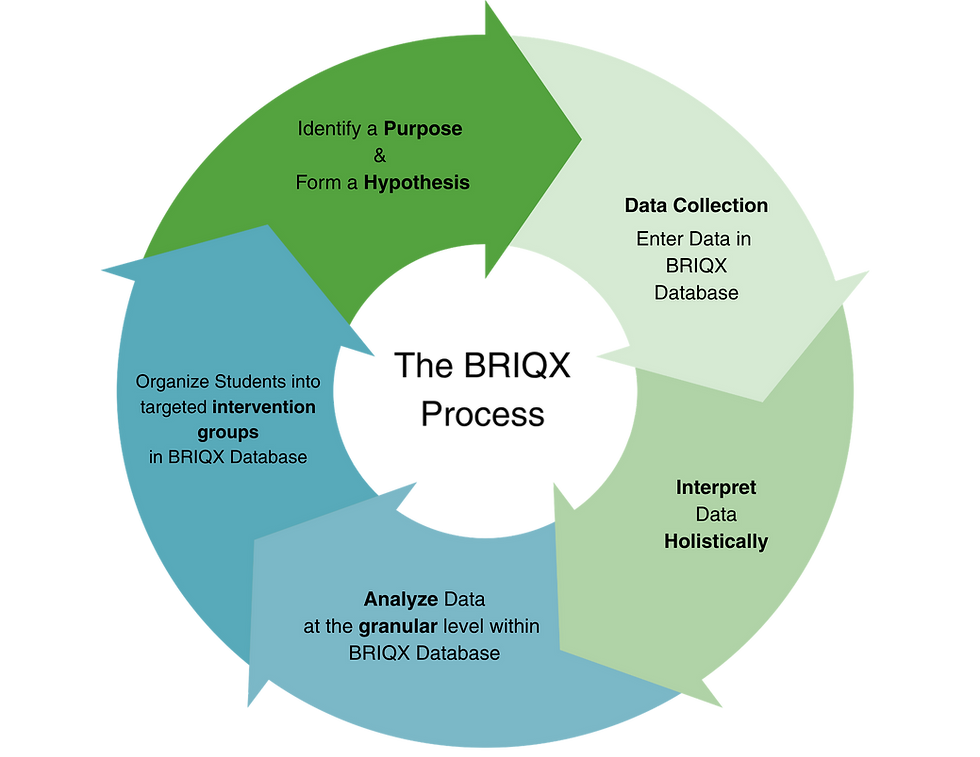.png)
(Quiroz, 2025)
2
BRIQX Database
The BRIQX Database, serves as the central organizational hub for the DELP ensuring all components work seamlessly.
Once the missing 'bricks', or gaps, in math understanding are uncovered, the database streamlines the transition from analysis to action by efficiently organizing students into targeted intervention groups.
1
The Data Error Literacy Protocol is the backbone of the BRIQX program. It turns assessment data into an instructional decision making engine. It's a simple, researched-backed system - a repeatable 5 step instructional loop that:
-
Assesses student's current understanding
-
Diagnoses misconceptions using error analysis
-
Creates a focused, biweekly plan to improve student thinking
By pinpointing the missing 'bricks' - the specific root causes of academic struggle - the system identifies the most granular areas of need to begin effectively closing knowledge gaps.
-
The BRIQX Database, serves as the central organizational hub for the DELP ensuring all components work seamlessly.
Once the missing 'bricks', or gaps, in math understanding are uncovered, the database streamlines the transition from analysis to action by efficiently organizing students into targeted intervention groups
Once students are organized in the database, teams are able to execute a precise action plan, delivering focused instruction on the exact skills required for student success.
A shared language of analysis reduces variability in how student data is interpreted across teams while respecting professional judgment. By establishing consistent language it provides a common structure for discussing student learning, identifying skill gaps, and determining aligned instructional next steps—strengthening collaboration, clarity, and confidence for both teachers and administrators.
3
Intervention
Once students are organized in the database, teams are able to execute a precise action plan, delivering focused instruction on the exact skills required for student success.
When teachers use the same language to analyze student errors, collaboration becomes more precise and intervention more targeted. BRIQX provides a common framework for discussing misconceptions, identifying gaps, and determining next steps — so teams spend less time on interpretation and more time on instruction.
4
Shared Language in Analysis
The Power Is In The System
Math Interventionist
As the math interventionist for our school, I have worked closely with Dr. Q. She has introduced the DELP and guided us in its use. This format for looking at data has helped streamline and strengthen our WIN time.
The DELP offers a global view of progress across the school while at the same time looks for individual student strengths and needs.
This systematic way of viewing data keeps the teaching relevant and quickly moves students so they are always being challenged. She has also introduced the BRIQX Database. The software makes it easy to enter and track data, student groups, and lessons. The data can be sorted by student needs, learning groups or teachers with the click of a button.
Special Education Teacher
In special education, my students often do not “fit” into a learning group that will meet their unique needs. However, with the BRIQX Process we have implemented for Math Win, under the guidance of Dr. Q, age and grade are not a factor in determining which group the students are placed in.
Decisions are made based on diagnostic tests that determine the needs of the students.
This ensures all students, including my special education students, have their needs met. Since students are receiving “just right” instruction they are making gains. Most of my students have increased stages and are ready for the next level of instruction, ensuring there are no gaps that will slow them down in the future.